


The ComSOP requires commercial property inspectors to inspect decks, balconies, patios, and terraces. Traditionally, a terrace is defined as an elevated open area or attached outdoor space located on a building rooftop or above grade level. For example, hotels often utilize terraces for rooftop dining.
However, the terrace shown in this office inspection video is situated below grade from the main building entrance. It’s a poured-in-place concrete, multi-level structure with a retaining wall and concrete stairways connecting each terrace level.
The primary factors inspected in the video include concrete surface conditions, drainage features, and occupant safety considerations.
Concrete Surface Condition
Inspecting the surface condition is two-fold, requiring assessment of the structure’s plumb, level, square, and straight characteristics, as well as signs of needed repairs or maintenance or evidence of past repairs or maintenance.
Assessing plumb, level, square, and straight provides insight into the terrace’s structural stability and background context for observed conditions, such as cracks or other signs of movement.
Inspect for signs of patching, deterioration, cracking, or failed sealants. Concrete naturally requires maintenance, including cleaning, sealing cracks, maintaining waterproofing systems, and addressing surface deterioration or other damage. Some concrete structures require increased maintenance when exposed to harsh chemicals, such as rock salt or chemical deicers.
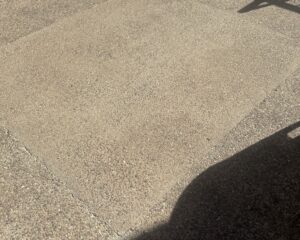
Sign of previous repair
Drainage Features
The ComSOP requires inspectors to assess drainage conditions that may adversely affect the structure, including drainage inlets and outlets, drainage pathways, and vegetation. Proper drainage is essential, as poor water management can contribute to deterioration, ponding, slip hazards, and moisture intrusion.
Commercial terraces utilize different drainage systems depending on their design and elevation. Common systems include surface drainage, where water flows across a sloped surface toward visible drains or edges; internal drains, where water is collected through drain openings connected to concealed piping; and scupper systems, which discharge water through openings in parapets or exterior walls.
Inspectors should verify drainage features are present, pathways are unobstructed, and slope conditions direct water toward intended collection points. Obstructions may include debris, clogged drains, occupant items, or surface deterioration and damage.
Occupant Safety Considerations
Inspecting for occupant safety is also two-fold, requiring assessment of the terrace for both everyday use and emergency egress.
Key aspects include:
- Stairways, including treads, risers, handrails, guards, rails, and landings
- Edge protection at elevated surfaces
- Trip hazards from surface conditions or occupant items
- Unobstructed means of egress paths
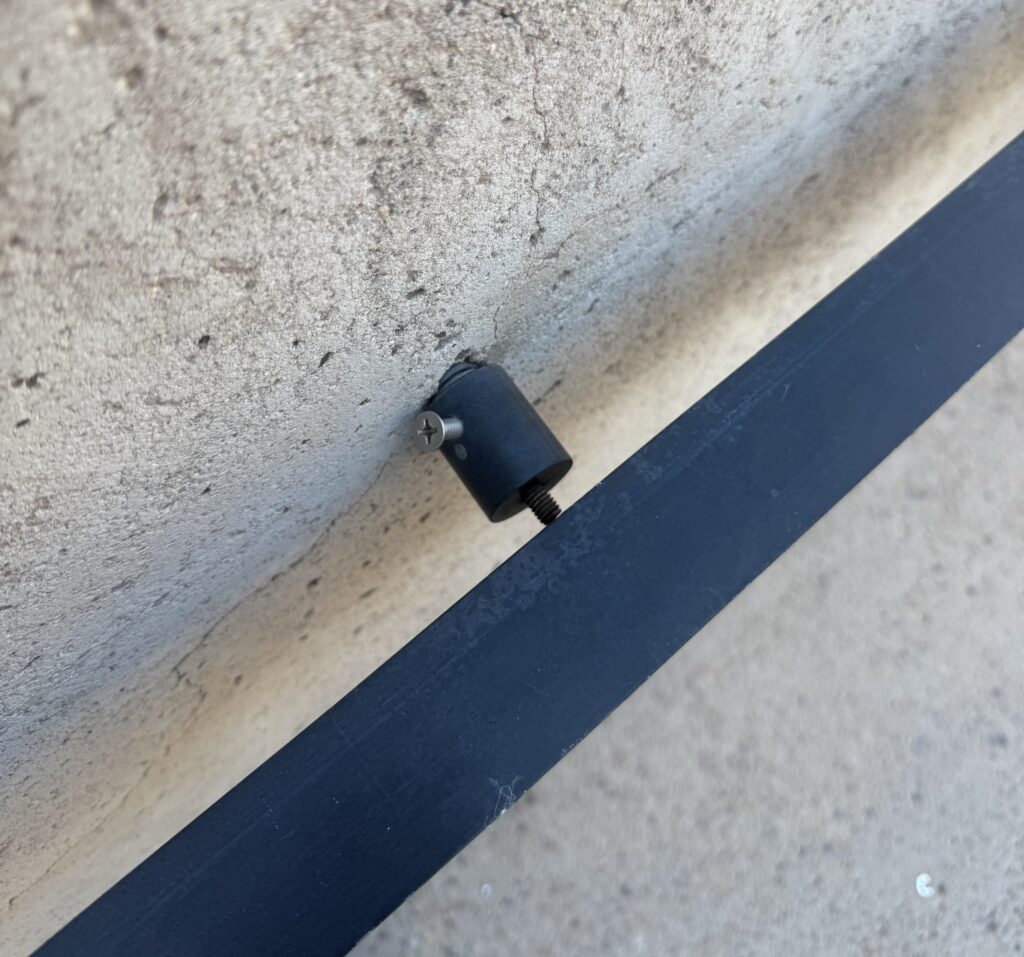
Loose handrail
Inspection considerations include broken or loose stairway features, non-graspable handrails or handrail ends that do not properly return, inadequate edge protection, and lack of tread and riser dimensional uniformity. In the video, the concrete stairways create several elevation transitions that require careful evaluation. Refer to the checklist Inspecting Stairways, Railings, and Guards at Commercial Buildings to learn more.
Any condition that impairs the means of egress should be documented, as restrictions may compromise occupant safety and hinder emergency evacuation. Examples include narrowed walkways, improperly placed furniture, decorative barriers, or architectural features that obstruct clear paths of travel. Learn more about means of egress conditions to look for in the Inspecting Commercial Fire and Life Safety Systems Online Course.